IndonesianForecast, JAKARTA — The building construction sector is encouraged to contribute to reducing carbon emissions.
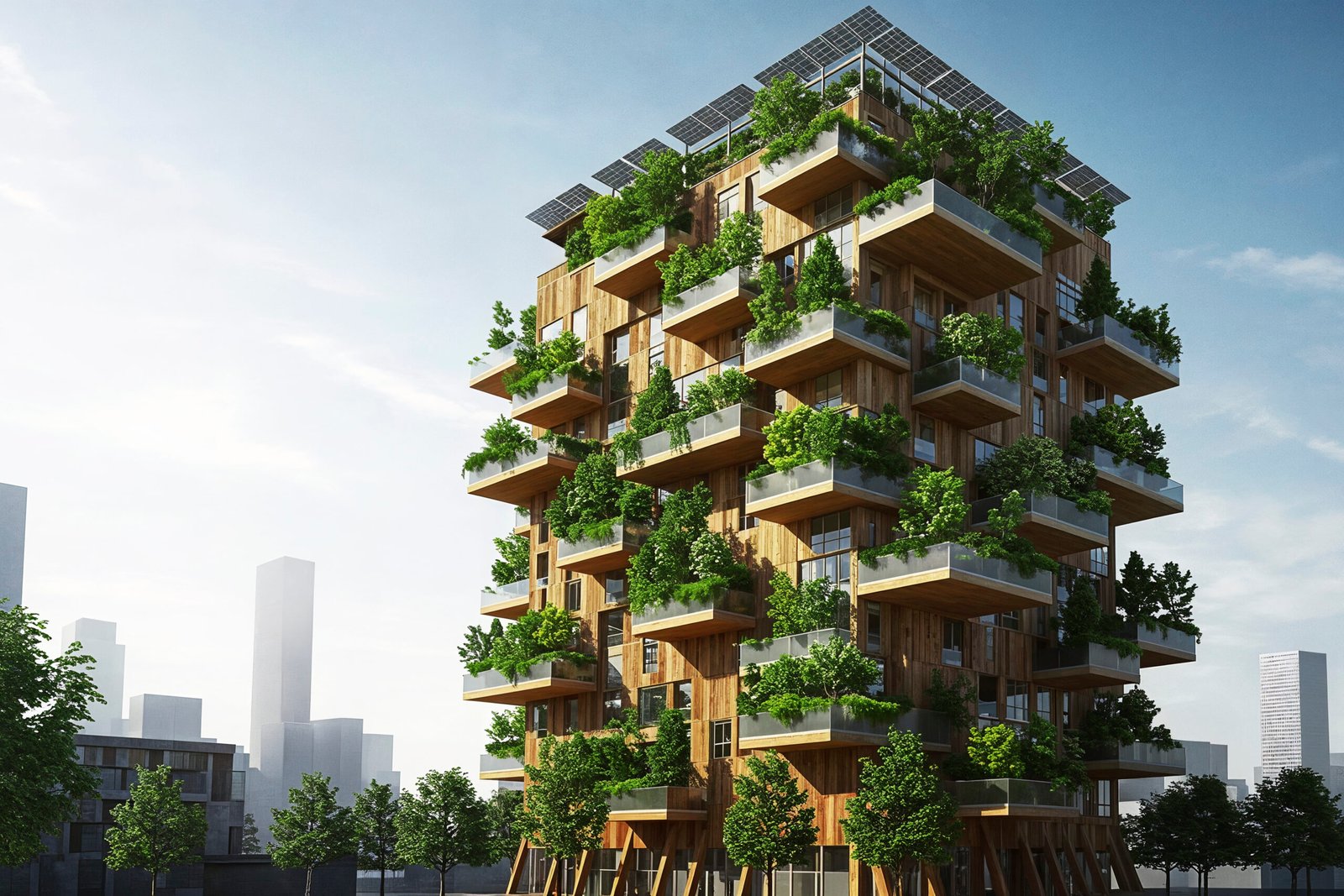
Amidst the escalating climate crisis, energy conservation efforts have become increasingly urgent, with the concept of green buildings emerging as one of the strategic solutions to reduce emissions in the building sector. This transformation encompasses efficient architectural design, the use of renewable energy, and the use of more environmentally friendly materials.
Maharani Dyah Alfiana, an Energy Efficiency and Conservation Analyst at the Institute for Essential Services Reform (IESR), said that the transformation of the building sector is one of the key elements in accelerating the energy transition in Indonesia. Through four parameters, namely electrification, minimum energy performance standards, energy management, and green buildings, the development of this sector can be monitored and encouraged to be more efficient, low-emission, and in line with the national target of net zero emissions (NZE).
Indonesia has several green building certification schemes such as Green Building, Greenship, and Excellence in Design for Greater Efficiencies (EDGE). By 2024, the total area of certified buildings will reach 7,4 million square meters. Based on projections from the Ministry of Public Works and Housing (PUPR), this area is expected to increase to 16,5 million square meters by 2030, but this figure is still far from the roadmap target of 110 million square meters
According to him, the realization of emission reductions in this sector has not been optimal. In 2024, it will only reach around 0,35 MtCO₂e, and it is projected to only reach around 0,79 MtCO₂e in 2030. Meanwhile, the roadmap target is around 14 MtCO₂e. This means that the current achievement is only around 6%.
“This gap arises due to the lack of certified professionals, weak coordination and data integration between certification agencies, and the absence of a national data center to monitor the development of green buildings. Therefore, increased support from local governments, stronger local regulations, and the development of an integrated database between certification agencies are needed,” he said on Wednesday (11/26/2025).
Chairperson of the Green Building Council Indonesia (GBCI) Ignesjz Kemalawarta said there are three main aspects in establishing green buildings, namely microclimate and site optimization, which is ensuring that buildings are designed according to microclimate conditions and minimizing environmental impact. Then, a green approach to construction, which emphasizes a more environmentally friendly construction process, from material selection to waste management.
Next is energy management, which is the optimal management and conservation of energy during the operational period of the building.
These three aspects, if implemented properly, will enable the building sector to contribute significantly to the achievement of Indonesia’s Nationally Determined Contribution (NDC). Not only that, looking at the global direction, by 2060 all new buildings should ideally meet green building standards. To get there, Indonesia needs a clear roadmap for building sector emissions, including targets for green building area in square meters that must be achieved,” he said.
According to Ignesjz, with a roadmap and supporting policies, the government can create a climate that encourages investors and developers to build green buildings on a larger scale. This is important to accelerate the decarbonization of the building sector while ensuring that the direction of national development is more sustainable.
Separately, Diep Nguyen-van Houtte, Senior Manager for Innovation and Business Development at the International Finance Corporation (IFC) Climate Business Department, said that in Indonesia, the progress of green building adoption is also driven by policy and regulatory reforms.
Efforts to align policies with the national target of reducing emissions by 29% by 2030 have opened up great opportunities for environmentally friendly construction practices to become part of the mainstream of development. In Indonesia, there are four commonly used green building certifications, namely the Excellence in Design for Greater Efficiencies (EDGE) Certification by IFC, the GREENSHIP Certification by the Green Building Council Indonesia (GBCI), Leadership in Energy and Environmental Design (LEED) Certification by the U.S. Green Building Council (USGBC), and Green Mark Certification by the Building and Construction Authority (BCA) of Singapore.
From 2015 to July 2, 2025, Indonesia has been one of the most active countries in adopting EDGE. IFC has recorded 200 green building projects that have been EDGE certified throughout Indonesia, both completed and still in the design phase. The total area of certified buildings reaches 4,33 million square meters, including 27.620 housing units.
These projects include residential, commercial, and public facilities. Some of them have even achieved zero carbon status, demonstrating a commitment to a low-emission future and supporting net-zero targets.
“One of the important milestones occurred in April 2022 when the Istiqlal Mosque in Jakarta, which is the largest mosque in Southeast Asia, became the first place of worship in the world to achieve final EDGE certification. This achievement is proof that the principle of sustainability can be applied to both historic and modern buildings,” he said.
IFC notes Jakarta as the province with the highest growth rate in the green building market in Indonesia, with a total of 171 certified buildings. Other provinces showing significant development are West Java, Banten, East Java, and Central Java. West Java has 45 certified green buildings, followed by Banten and East Java with 26 buildings each, and Central Java with 15 buildings. Of the 38 provinces in Indonesia, 25 already have certified green building projects.
“The Java region has the highest number of certified green building projects, followed by Sumatra and Kalimantan, which are showing positive growth trends. This initiative is claimed to be able to significantly reduce carbon emissions and save energy and water,” he explained.
According to him, this achievement reflects the global trend towards more sustainable and resource-efficient buildings. He believes that EDGE has helped drive market transformation in various developing countries with a practical, measurable, and easy-to-implement approach. With increasing awareness of the importance of green buildings, EDGE continues to play an important role in driving positive change in both the market and policy.
“We are committed to continuing to expand our cooperation with governments, developers, and other partners around the world. EDGE is designed as an easily accessible and affordable digital platform,” he said.
The application of green building principles in projects with EDGE Certification is claimed to be able to cut carbon dioxide (CO2) emissions by a total of 100.000 tons of carbon dioxide (CO2) per year, save 120.000 megawatt hours (MWh) of energy per year, and save 4,7 million cubic meters of water per year. It should be noted that in addition to the 200 EDGE-certified projects, there are also 121 green building projects covering 5.16 million square meters with GREENSHIP Certification, 56 projects covering 1,13 million square meters, and 25 projects covering 1,43 million square meters.